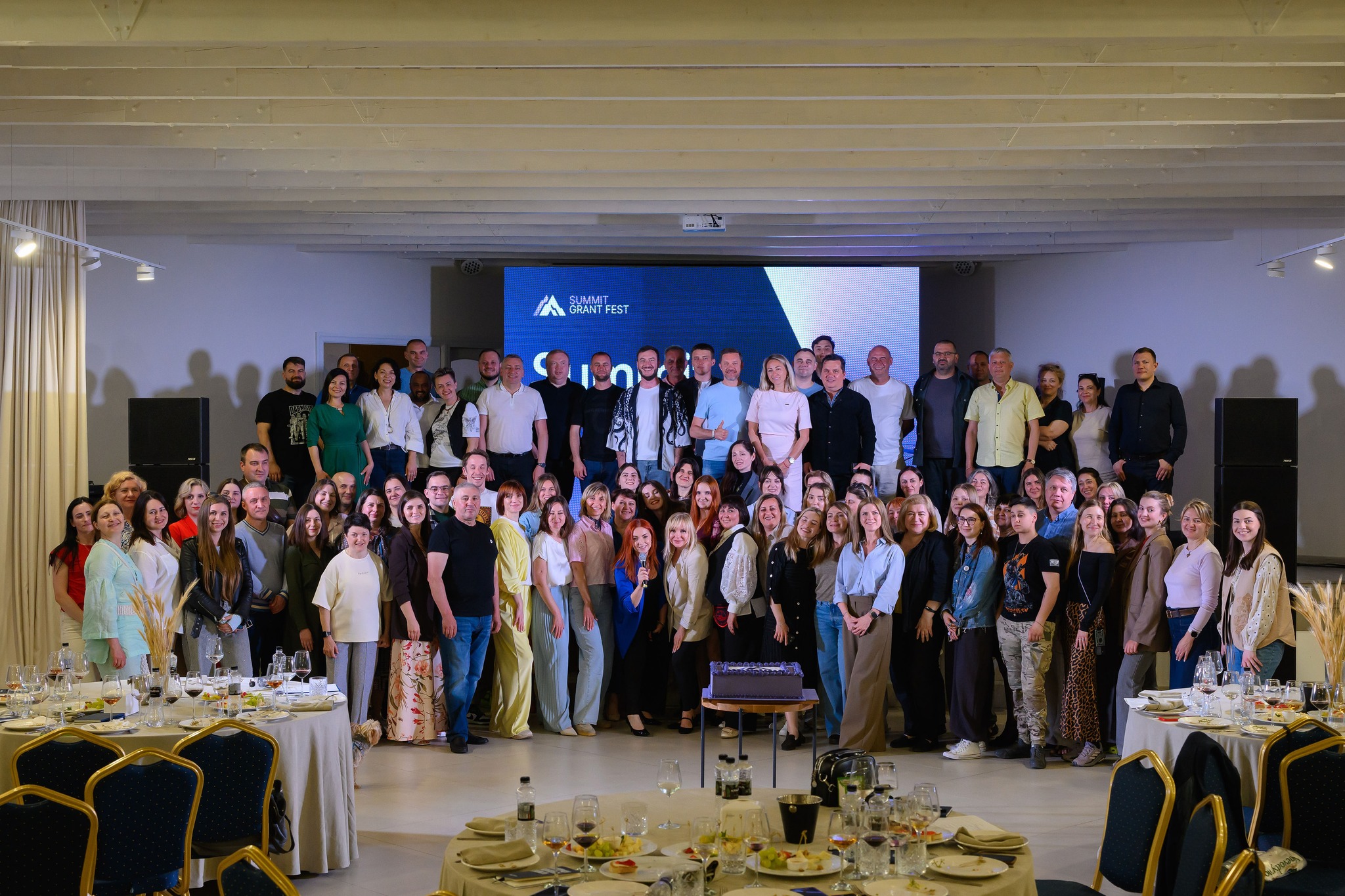
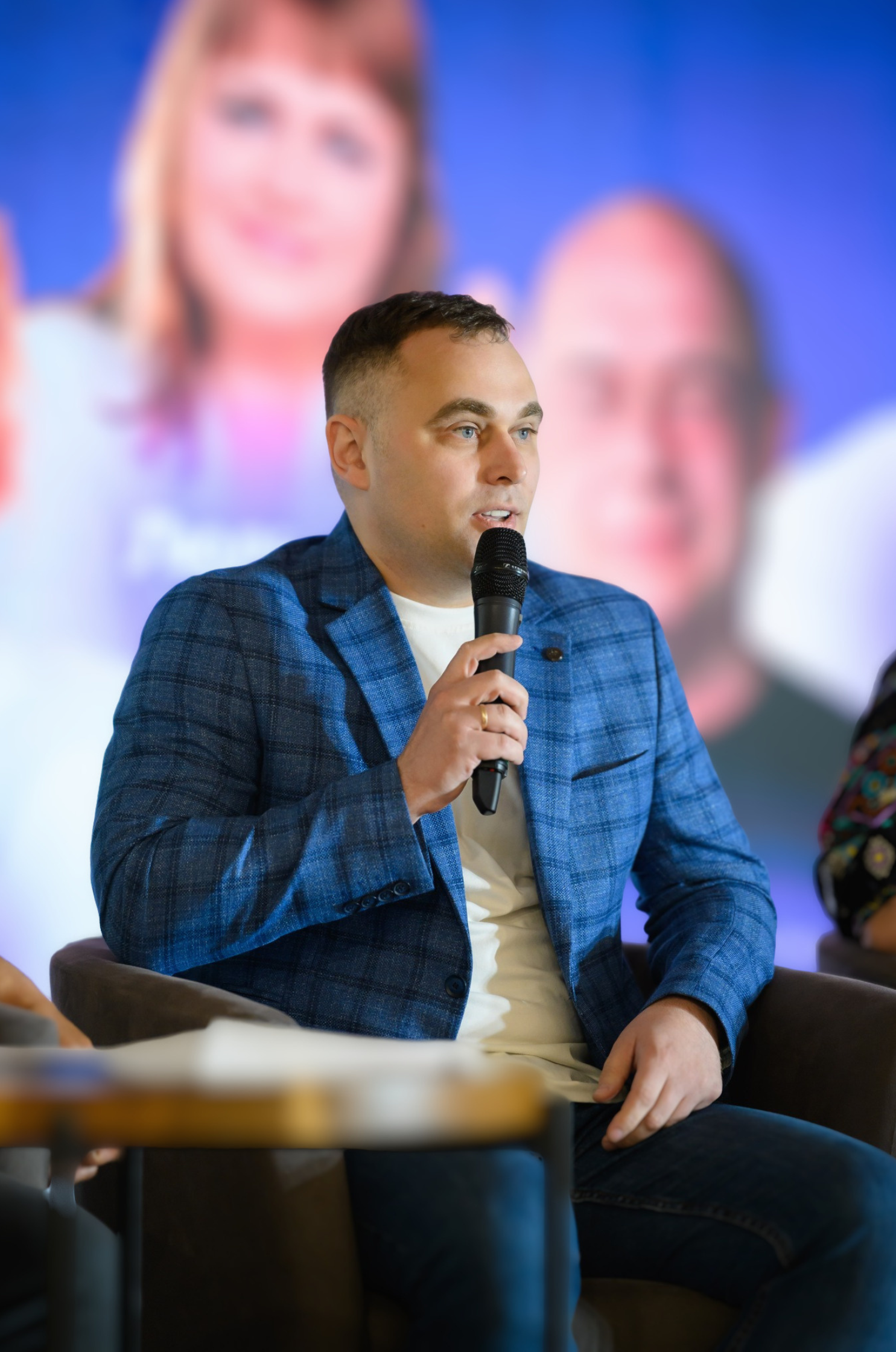
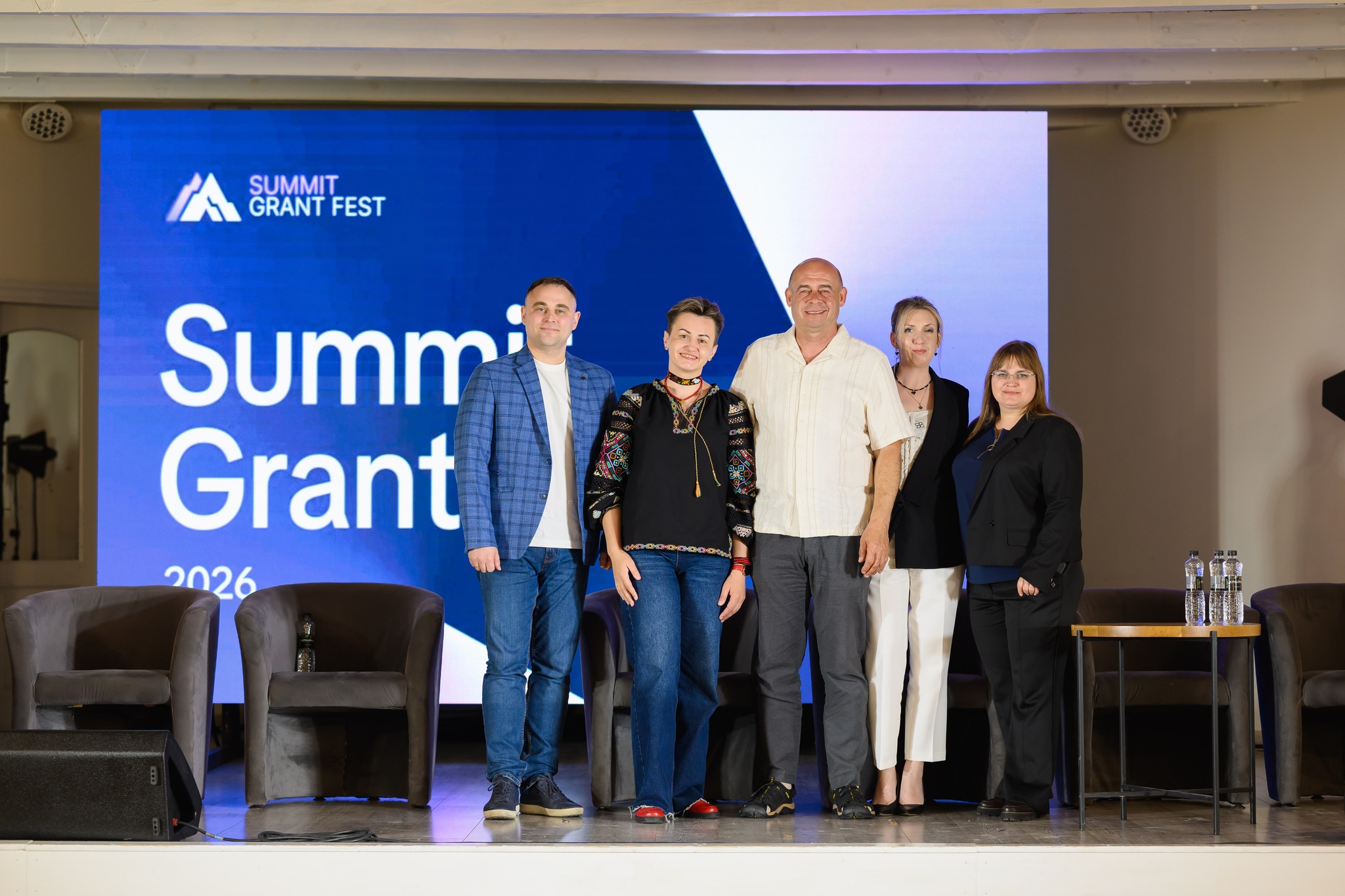
 On 22–23 May 2026, I had the honour of being an invited panel speaker at Summit Grant Fest 2026. Two days at Voevodyno Resort in Zakarpattia, 120+ participants from Ukraine and abroad, 25+ experts, four panel discussions. Reflecting on everything I heard and the new connections I made with experts and practitioners in project management and grant writing, I’m sharing what stayed with me and what I think is worth putting down in writing.
Personally, I’m starved for events like this in Ukraine – at this level and scale. The count matters less than the quality of conversations that happen here.
Nazariy Andruschak, CEO and founder of GetGrant
“No ties” – and that’s not an exaggeration
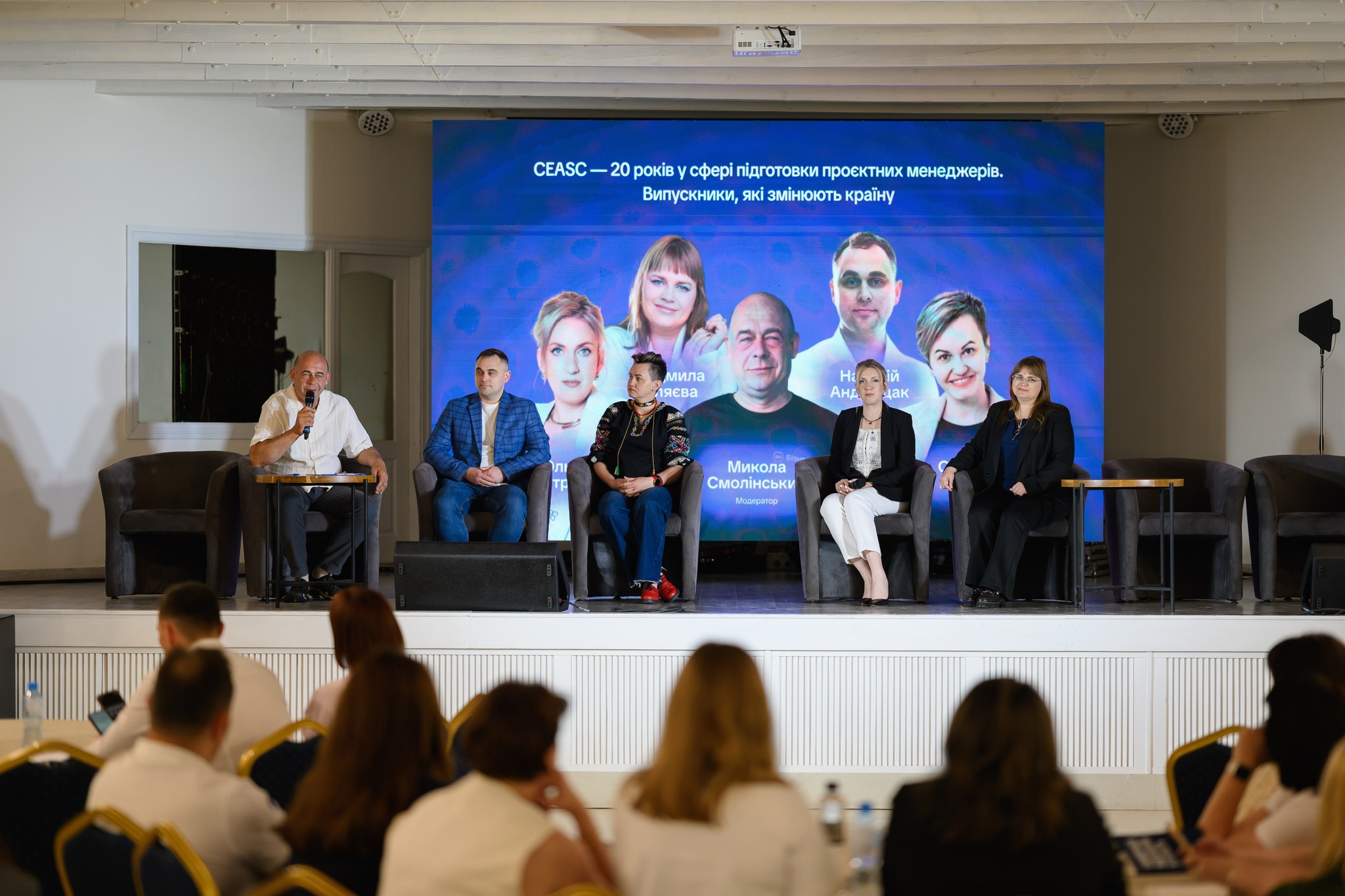
Summit Grant Fest was organised by the Central European Academy of Training and Certification (CEASC) – an organisation that has been training project managers for 20 years. That anniversary became the thread running through one of the panels: “CEASC – 20 Years of Training Project Managers: Experts Changing the Country.” I spoke on that panel.
The event ran “no ties” – and that’s not just a dress code. Donors, grant managers, business representatives, community members, and government officials genuinely talked to each other here rather than reading prepared remarks. The audience asked precise, sometimes uncomfortable questions, and panellists engaged in live debate among themselves. Everyone was working together to find answers to the most pressing questions and offering solutions from their own daily practice – trying to make the work of project managers and coordinators more structured and systemic. The moderator of our panel, CEASC president Mykola Smolinskyi, kept the atmosphere expert and deftly shaped the emphasis in the speakers’ answers.
The programme covered panel discussions with Ministry representatives, donor and business institutions working in reconstruction and European integration, workshops and mastermind sessions on grant management, and a Pitch Day for leading projects in innovation, energy, culture, and veteran policy. Plus Speed Dating Lunch – more on that shortly.
 The panel: what we actually discussed
On our panel we talked about attracting EU grant funding, what challenges stand in the way of the first million euros, and what to do once you’ve won a grant. I opened by revisiting a point I first heard from Mykola Smolinskyi back in 2013: that winning a grant is hard, but successfully implementing it is harder. Throughout the panel we looked for new approaches – what has changed since then and what’s still missing to increase the odds of winning project submissions. Three themes kept coming up in different forms.
Typical mistakes in proposal preparation. Most failed applications fail not because of a weak idea. They fail because the applicant didn’t answer the question the evaluator is looking for in a specific section. A grant application isn’t a description of what you plan to do. It’s proof that you understand the system in which the donor allocates funds.
Building international consortia. A consortium coordinator is looking for a specific advantage, not a “good partner.” If your organisation can’t clearly answer the question “what specific value will you bring to this project,” you’ll get into the consortium only to fill a formal country-coverage requirement. That’s a weak position. A strong position is having a dataset, a specific competence, or access to an audience that no one else in the consortium holds.
The EU grant system is not a lottery. This is probably the most important thing I repeat at every opportunity. The system has clear logic, evaluation criteria, and rules that are public and available. If you know them, your odds of success grow significantly. If you submit “on luck” without studying the work programme, the result is predictable.
GetGrant on stage: live feedback
Beyond the panel discussion, I had the opportunity to share two things connected to my daily work.
GetGrant Service – our AI-powered platform for finding grants and consortium partners, built for universities, R&D centres, SMEs, startups, and NGOs. The best moment: several participants came up afterwards and said they’re already actively using GetGrant service. Live feedback in person is something no analytics dashboard replaces.
Find EU grants for your project or organisation
GetGrant – AI search across Horizon Europe and hundreds of other open programmes for universities, NGOs, businesses, and teams.
KanriFlow – a new project management tool we’ve adopted internally. It was designed for the specific complexity of large EU consortia: 10+ partners, multiple reporting levels with their own deadlines, task completion tracking, financial monitoring, automatic reminders for reports and events, coordination of joint work package meetings for 100+ participants, and constantly shifting work plans. Its key feature is that the working environment and reporting setup is configured individually to match the consortium’s requirements in the grant agreement, and the platform setup process works through AI methods that analyse the grant agreement and automatically generate the collaboration system profile with the right access rights.
Speed Dating Lunch: where partnerships actually form
The real value of events like this always lies between the sessions. Speed Dating Lunch is a format where you sit down with 8–10 different people in a fixed amount of time. You leave with a stack of cards and a handful of conversations you want to continue.
Open Space also worked well. Workshops and mastermind sessions pulled people into small groups around specific questions. In those formats people talk more openly than on plenary panels and make more concrete agreements.
I left with several genuinely promising connections with leaders in Ukraine’s project management ecosystem and a few potential joint projects already in early discussions. I’ll share more on some of those soon.
Why CEASC’s 20 years matter more than they might seem
The CEASC anniversary panel wasn’t a nostalgic look backward. It was a conversation about the fact that Ukraine’s grant management community actually exists, and has depth. Twenty years of training practitioners means hundreds of people across the country running real projects today. Several of them were in the room.
That context matters to me. GetGrant is built for those people. Not for an abstract “grant seeker” but for the project manager who knows exactly what Horizon Europe is – and still spends hours on manual portal monitoring. We want to give that time back.
Summit Grant Fest reminded me: this community is growing. The quality of conversations and the level of questions from the audience are clearly higher than a few years ago. People arrive not asking “what is a grant” but “how do I structure a consortium” or “how do I justify a budget across five work packages.” That difference is real.
One takeaway I keep repeating
EU grants are a system. Once you understand it, your chances of success grow exponentially.
I say this often and deliberately. One of the most common mistakes is submitting an application without spending time on the work programme of the specific call. Every Horizon Europe call contains several pages explaining exactly what the European Commission is looking for. That’s a public document and it sits on the portal. But most applicants either don’t read it through or read it only after they’ve already written the application.
Exchanging experience with people who have already been through this shortens the learning curve. That’s exactly why Summit Grant Fest is more than a calendar event. In two days, you can learn what might otherwise take months of trial and error.
Thank you to CEASC for this event! And separately to Olha Horkavchuk, Nadia Hrachova, and Mykola Smolinskyi for the level of organisation and for bringing these people into the same room. This has to happen again. Summit Grant Fest 2027 – let’s go!